
How Heavy is 'Heavy'?
I’ve talked a lot about why resistance training for women over 40 is so important, preventing sarcopenia (age-related muscle loss), protecting bone density, and maintaining a healthy metabolism. But the "how" is where most of us feel a sense of uncertainty. Specifically, how heavy do I actually need to lift, and how often do I need to do it?
If you are training to protect your long-term health, you don’t need to perform dangerous, maximum-effort lifts. But you do need to understand how to measure intensity. This post is on how to find the "sweet spot" for muscle growth without the guesswork.
While any form of exercise is positive, it’s important to acknowledge that no single type of exercise does everything, understanding that different goals require different tools. While lower-intensity movements are excellent for endurance, we need a specific level of mechanical tension to signal the body to keep and build muscle as we age.
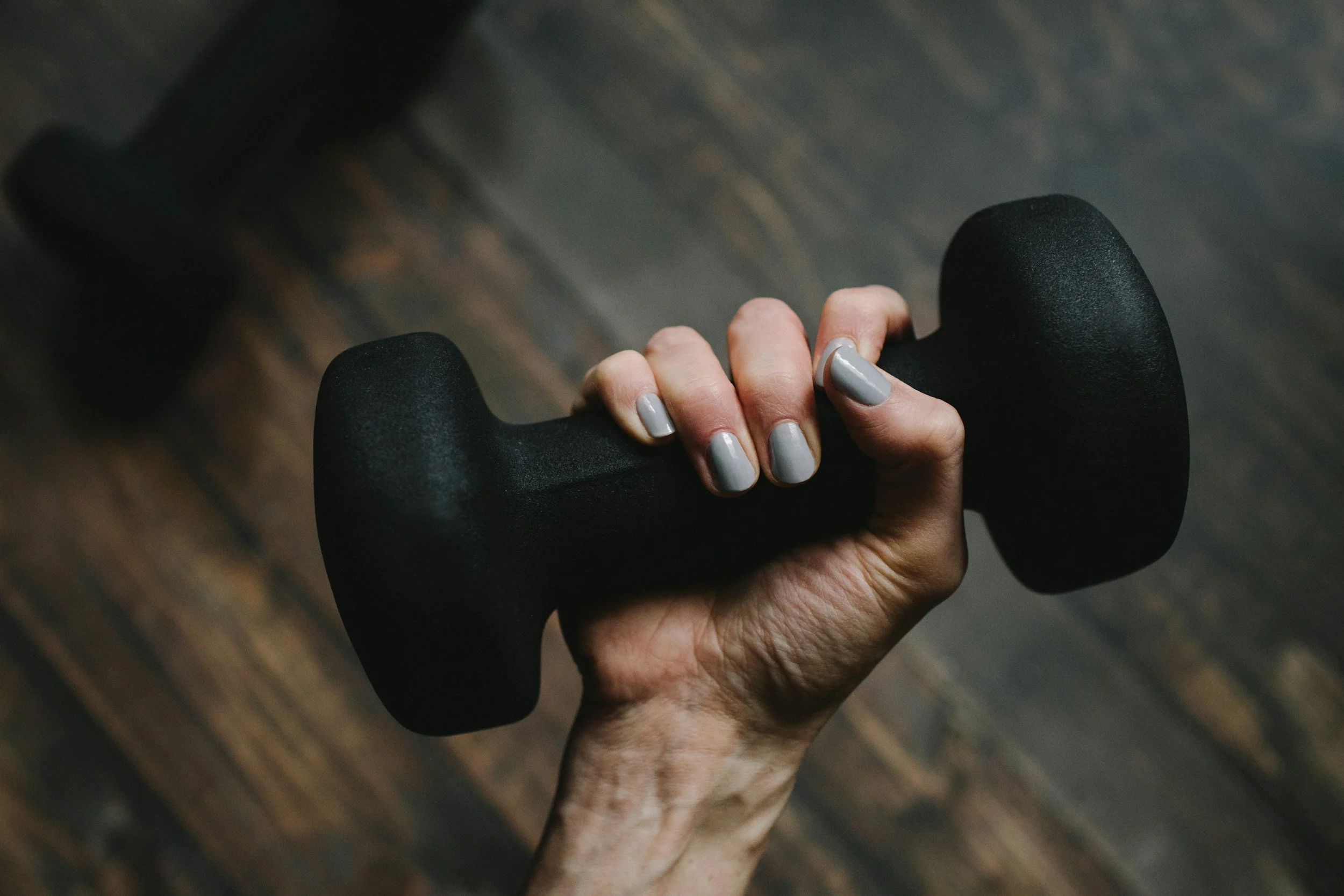
Many fitness classes aimed at women focus on high repetitions with very light weights (1kg–3kg). While this could be beneficial for joint mobility or muscular endurance. Your body is very efficient. If you pick up a light weight, it only recruits your Type I (the slow-twitch endurance)muscle fibres. To wake up your Type II (fast-twitch) fibres the "power" fibres that typically decline first during the perimenopause the weight must be heavy enough that your brain is forced to "recruit" more muscle units to move the load. To trigger actual changes in the muscle (hypertrophy), you need to lift weights that require real effort [1, 2].
In weightlifting, intensity is often measured against a 1-Repetition Maximum (1RM) the absolute maximum weight you can lift once with perfect form. For the purpose of reversing muscle loss, research suggests lifting at 75% to 85% of your 1RM [3, 4]. This provides the optimal level of mechanical tension required to trigger muscle protein synthesis.
In practical terms, this equates to a weight that you can lift about 6 to 10 times with perfect control before your form begins to waver. If you can easily perform 15 or 20 repetitions, you are training your endurance, but you aren't providing a strong enough stimulus to override anabolic resistance, the body's decreased sensitivity to muscle-building signals that often occurs after 40 [5].
You don't actually need to test your 1RM to find this zone. Instead, we can use two much easier tools to ensure you are lifting safely and effectively.
RPE The "Effort Scale"
RPE stands for Rate of Perceived Exertion. It’s a scale from 1 to 10 that measures how hard a set felt to you.
RPE 1–5: Very light. Useful for warming up, but won't stimulate much muscle growth.
RPE 7–8: The "Sweet Spot." This is where the last few reps feel slow and challenging, but your form remains perfect.
RPE 10: Absolute failure. You could not perform another rep.
To effectively combat sarcopenia, the majority of your working sets should land between an RPE 7 and 9.
RIR: The "reps in reserve" Method
RIR stands for Repetitions in Reserve. After you finish a set, ask yourself: "How many more reps could I have done with good form?"
5+ RIR: The weight is likely too light to trigger a muscle-building response.
1–3 RIR: You are in the perfect zone for stimulating those vital Type II fibres.
0 RIR: This is "technical failure." You should stop the set before your form breaks down.
Why Your "Heavy" Changes Daily
For women in midlife, a 1RM isn't a fixed number. Because our nervous system is sensitive to sleep quality, stress levels, and hormonal fluctuations, your strength can change from day to day.
Using RPE and RIR allows you to auto-regulate. Your muscle cells don't have eyes; they don't know the number on the dumbbell, they only know the internal tension they feel.
On a well-rested day: 20kg might feel like an RPE 7.On a stressed or tired day: 10kg might feel like an RPE 7.
Both days are equally effective. On the tired day, your nervous system has to work harder to move the lighter weight, creating the same muscle-building signal as the heavier weight did when you were fresh. By listening to your RPE, you avoid pushing into a "danger zone" where fatigue leads to injury, while still ensuring your muscles get the work they need [6].
Frequency and the Repair Window
In our 40s, we need the stimulus of the lift, but our recovery capacity is more easily taxed.
The Schedule: Aim for 2 to 3 full-body resistance sessions per week.
Muscle is not built while you are lifting, it is built while you are sleeping and resting. To avoid overtaxing your joints and nervous system, aim for at least 48 hours of rest between sessions that work the same muscle groups.
How to Progress
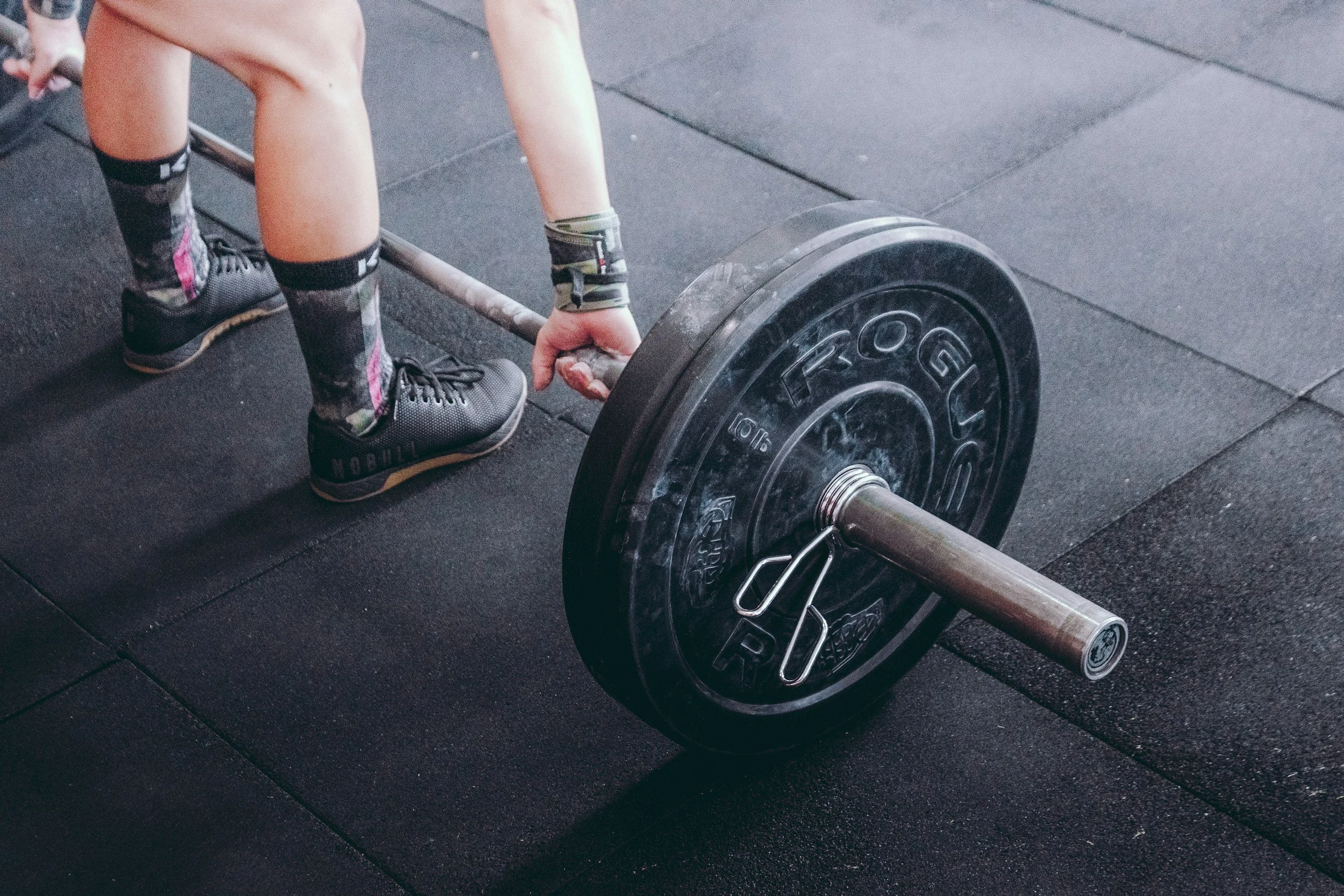
To ensure your muscles continue to adapt, you must apply Progressive Overload. This doesn't always mean adding more plates to a bar. You can also progress by.
Adding repetitions: Performing 10 reps instead of 8 with the same weight.
Improving control: Moving with more intention and a slower tempo.
Your Gym Challenge This Week
Choose one main movement, such as a goblet squat or a chest press. Perform a set of 8 to 10 reps with your usual weight. At the end of the set, honestly assess your RIR.
If you could have comfortably performed 5 more reps, you can increase the weight in your next set. Find that challenging but controlled zone where you only have 2 reps left in the tank. That is the threshold where you stop just moving and start building a resilient body.
Sarcopenia might be a use it or lose it scenario, but you don’t have to navigate the science on your own. If you’re ready to move away from guesswork and start a structured, evidence-based strength programme tailored to your body’s changing needs, I’m here to help you bridge the gap. Let’s work together to build your metabolic strength and ensure you're performing at your best for years to come.
References
1.Nilwik, R., et al. (2013). The decline in skeletal muscle mass with ageing is mainly attributed to a reduction in type II muscle fibre size. Experimental Gerontology.
2.Lexell, J. (1995). Evidence for nervous system degeneration with advancing age. The Journals of Gerontology.
3.American College of Sports Medicine (2009). Progression models in resistance training for healthy adults. Medicine & Science in Sports & Exercise.
4.Schoenfeld, B. J. (2010). The mechanisms of muscle hypertrophy and their application to resistance training. Journal of Strength and Conditioning Research.
5.Westcott, W. L. (2012). Resistance training is medicine: effects of strength training on health. Current Sports Medicine Reports.
6.Zourdos, M. C., et al. (2016). Novel Resistance Training-Specific Rating of Perceived Exertion Scale Measuring Repetitions in Reserve. Journal of Strength and Conditioning Research.
Disclaimer. I love sharing the science behind how our bodies work, but please remember that this post is for educational purposes only. My goal is to empower you with general nutritional and fitness guidance to support your long-term health. This isn't a substitute for professional medical advice, diagnosis, or treatment. Every "body" is unique, so please check in with your doctor before starting a new nutritional or training programme to ensure it’s the right fit for your individual needs.