
The Biology of Sarcopenia
Health talk in our 40s and 50s, the conversation usually revolves around what we want to lose. But, the most important factor for your long term health, mobility, and metabolism is actually what you need to keep, your muscle.
The clinical term for the loss of muscle mass and strength as we age is Sarcopenia. I have written about this before, but in this post I want to cover it in greater detail.
Sarcopenia isn't an overnight change, but a slow process that often accelerates for women during perimenopause. Understanding how this works biologically gives you the information you need to move away from workouts that will not be serving you, and towards a strategy that will protect your future self.
Our muscles are made up of different types of fibres. Type I (slow-twitch) fibres are for endurance, like walking or cycling. Type II (fast-twitch) fibres are for power, strength, and reacting quickly.

The sign of sarcopenia is the selective atrophy of Type II fibres. When we lose muscle mass, it is almost entirely because our Type II fibres are shrinking, while our endurance fibres stay relatively stable [1].
This is why you might feel like you can still manage a long walk or a jog perfectly well, but find that lifting a heavy suitcase or keeping your balance after a trip feels much harder. This isn’t losing fitness in the traditional sense, it’s losing the power muscle fibres.
Your muscle doesn't work in isolation, it’s controlled by your nervous system. Every muscle fibre is attached to a motor neuron (a nerve cell). Sarcopenia involves a process called denervation, where these nerve connections begin to pull away or die off. When a muscle fibre loses its spark from the brain, it eventually withers away.
The good news is that heavy resistance training is the only known way to encourage re-innervation. It effectively tells the remaining nerves to adopt those orphaned fibres, keeping the muscle alive and functional [2].
In our 20s, our bodies were very efficient at turning a meal into new muscle. But in our 40s, something called Anabolic Resistance happens. Essentially, the switch that tells our body to repair and build muscle becomes a bit stiffer and harder to flip.
To flip that switch, we need a higher concentration of a specific amino acid called Leucine. Think of Leucine as the trigger for muscle repair. If a meal doesn't have enough protein, you won't reach the Leucine Threshold, and your body won't start the building process. This is why having small protein snacks throughout the day isn't as effective as eating larger amount of protein at set mealtimes [3, 4].
For women, this process is closely tied to our hormones. Estrogen is a powerful build signal for our muscles. It helps regulate Satellite Cells, which are like the muscle's own internal repair crew.
During perimenopause, as estrogen levels fluctuate and fall, this becomes less active. This means our muscles don't bounce back as quickly from exercise, and we need a stronger signal. Through both heavier weights and more protein, to get the same results we used to get with much less effort [5].
It’s helpful to view muscle as more than just the thing that helps you to move. It’s an active organ that talks to the rest of your body. When you lift something heavy, your muscles release molecules called myokines. These help lower inflammation, improve how your body handles sugar (insulin sensitivity), and even support brain health. By protecting your muscle mass, you are essentially protecting your entire metabolic system [6].
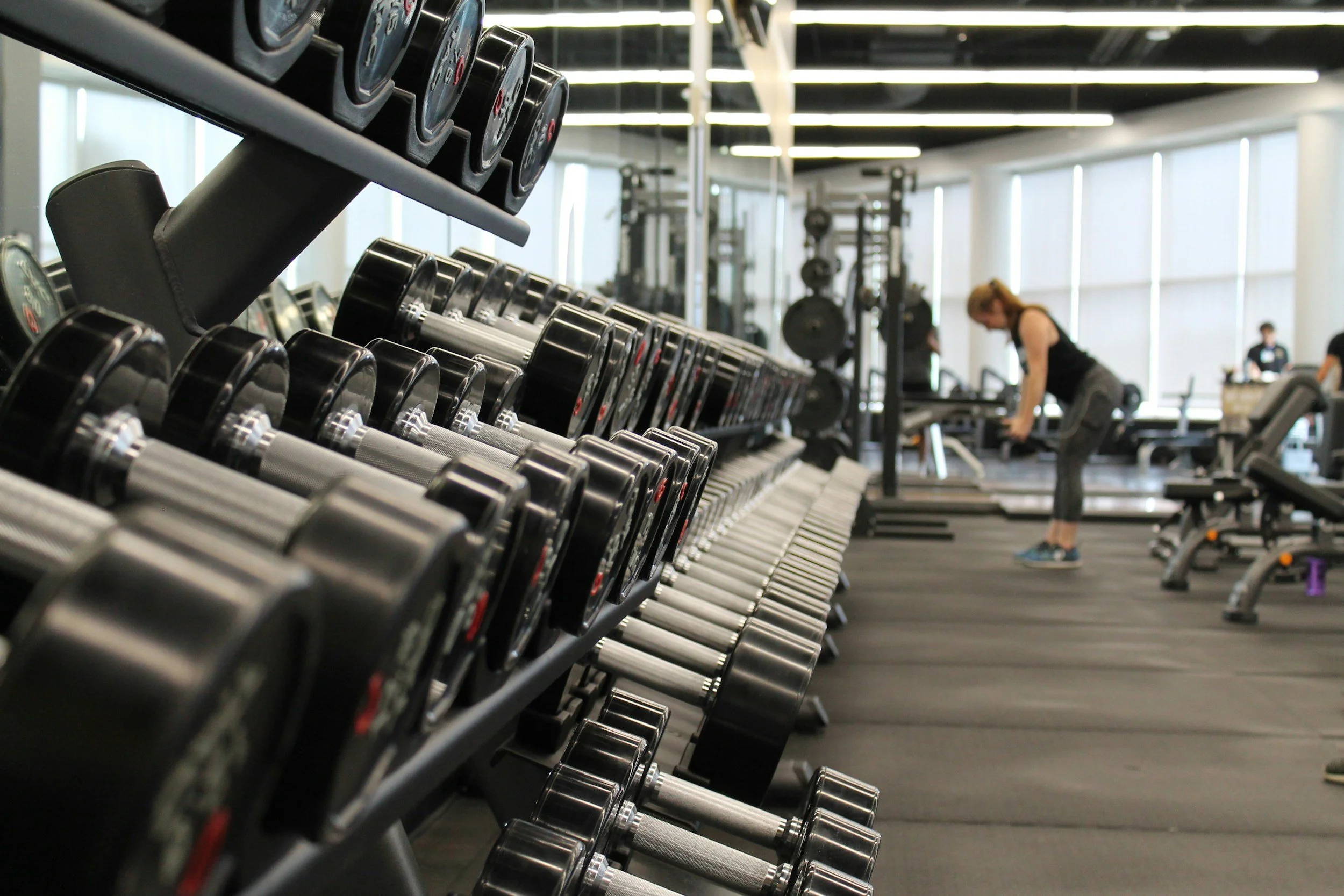
To reach those Type II fibres and keep your nerves connected, you need to lift weights that feel genuinely challenging. Aim for a weight where you can only manage 6 to 10 repetitions with good form. If you can easily do 15 or 20 reps, the weight is likely too light to trigger the changes you need [2, 7].
Try to ensure your main meals contain around 30g to 40g of high-quality protein. This ensures you hit that Leucine threshold to signal your body to stay in build and repair mode rather than breakdown mode [4].
While you should always consult your GP before starting a new supplement, it is worth noting the extensive research behind Creatine Monohydrate. It is one of the most studied aids in the world and has been shown to help muscles produce energy more efficiently. For women over 40, studies have highlighted its potential for supporting strength gains and even maintaining bone mineral density [8].
Sarcopenia might be a "use it or lose it" scenario, but you don’t have to navigate the science on your own.
If you’re ready to move away from toning and start a structured, evidence-based strength programme that actually respects your body’s changing needs, I’m here to help you bridge the gap. Let’s work together to build your metabolic strength and ensure you're performing at your best for years to come.
Disclaimer. I love sharing the science behind how our bodies work, but please remember that this post is for educational purposes only. My goal is to empower you with general nutritional and fitness guidance to support your long-term health. This isn't a substitute for professional medical advice, diagnosis, or treatment. Every "body" is unique, so please check in with your doctor before starting a new nutritional or training programme to ensure it’s the right fit for your individual needs.
References
Nilwik, R., et al. (2013). The decline in skeletal muscle mass with ageing is mainly attributed to a reduction in type II muscle fibre size. Experimental Gerontology.
Lexell, J. (1995). Evidence for nervous system degeneration with advancing age. The Journals of Gerontology.
Breen, L., & Phillips, S. M. (2011). Skeletal muscle protein metabolism in the elderly: Interventions to counteract anabolic resistance. Nutrition & Metabolism.
Schoenfeld, B. J., & Aragon, A. A. (2018). How much protein can the body use in a single meal for muscle-building? JISSN.
Collins, B. C., et al. (2019). Estrogen Regulates Myogenic Regenerative Capacity and Muscle Stem Cell Function. Nature Communications.
Pedersen, B. K., & Febbraio, M. A. (2012). Muscles, exercise and obesity: skeletal muscle as an endocrine organ. Nature Reviews Endocrinology.
Westcott, W. L. (2012). Resistance training is medicine: effects of strength training on health. Current Sports Medicine Reports.
Forbes, S. C., et al. (2021). Creatine Supplementation and Ageing Musculoskeletal Health. Nutrients.