
Beyond Stretching. The Power of Active Flexibility.
The single best thing about a great workout is how quickly it changes how you feel inside your own skin. You can walk into the gym feeling stiff, wound-up, and physically restricted, and walk out in less than an hour later feeling completely loose, warm, and free. But, when that tightness creeps back into our hips, shoulders, or hamstrings, our reaction is usually to reach for a resistance band or drop into a passive stretch. We have been conditioned to believe that gentle stretching is the only remedy for a rigid body. It isn’t. To unlock lasting physical comfort and true freedom of movement, you have to look past passive stretching and learn how to actively own your range of movement.

There is a profound difference between passive flexibility (how far a joint can be pushed by an external force or gravity) and active flexibility (the range of motion you can actually access, control, and support using your own muscular strength). If you want a body that moves fluidly and feels entirely unrestricted during daily life and heavy lifting, passive stretching is just a temporary fix. To improve your active flexibility, you need to train both your nervous system and your muscles to actively command that range.
The sensation of chronic muscle tightness is very rarely caused by the physical tissue being too short. It’s usually because of a protective strategy deployed by your central nervous system. Inside your muscle tissue are sensory receptors called muscle spindles. When a joint enters a range of motion where it lacks strength, the brain perceives a threat of structural failure. In response, it fires a defensive reflex that forces the surrounding muscles to spasm and contract, locking the joint down to prevent possible injury.
Training your active flexibility works by almost rewiring this threat detection system. When you use your own muscular effort to pull yourself into a deep position, you initiate a process called reciprocal inhibition the active contraction of the target muscle's opponent signals the nervous system to safely relax the tight tissue. This process proves to the brain that you possess active motor control in that outer zone, satisfying the security mechanism and causing the baseline neural tension to drop. You enter the gym feeling physically locked down, and you leave with a fluid, relaxed nervous system because you have shifted your body out of a defensive state.

Muscles are made up of tiny contractile units called sarcomeres, linked together to form muscle fascicles. When a muscle is habitually kept in shortened positions through sitting or partial-range exercise, it actually sheds these units, shortening the overall line of pull and making you inherently more rigid.
Passive stretching pulls on these tissues, but it lacks the necessary stimulus to force the body to rebuild its structural length. To alter the physical tissue, you must apply mechanical tension at long muscle lengths. When a muscle is forced to produce or resist force while highly elongated, it triggers a cellular remodelling process known as sarcomerogenesis the rapid creation and addition of new sarcomeres in series.
A comprehensive structural review demonstrated that applying high active tension to a muscle in its lengthened state is the primary catalyst for driving this longitudinal growth. By actively loading your joints at their outer limits, you physically lengthen the muscle fascicles, permanently expanding your movement boundaries rather than just temporarily tugging on tight fibres.
The human body is highly adaptive, but it is also efficient to a fault, it will not maintain strength when you don’t actively use it. Most traditional exercise routines operate exclusively within a narrow, middle range of motion. This leaves you vulnerable because the vast majority of soft-tissue strains occur at the end-ranges of movement the precise areas where your muscles are long, weak, and uncoordinated.
Active flexibility acts as a structural defence for these vulnerable end-ranges. By moving against resistance through a complete, uncompromised range of motion, you strengthen the tendons, ligaments, and deep stabilising structures right at the perimeter of the joint's capacity. This completely shifts how your body disperses physical stress.
A major systematic review and meta-analysis confirmed that resistance training utilising a full range of motion improves joint flexibility just as effectively as traditional static stretching, with the massive added benefit of building profound structural resilience and muscle mass. You stop feeling fragile at your physical limits because those limits are now supported by genuine strength.

While building active flexibility is an exceptional strategy for the majority of people, it requires a completely different approach if you are naturally hypermobile or have a joint laxity condition like Ehlers-Danlos Syndrome. For individuals whose ligaments are naturally loose, the body already possesses an abundance of passive range of motion. However, this range lacks structural security. The reflex to passively stretch because a joint feels tight is particularly dangerous here, that stiffness is often your nervous system desperately using muscular tension to hold an unstable joint together. For a hypermobile body, passive stretching directly strips away joint stability and increases the risk of dislocations.
Instead of trying to expand your range, your safety strategy must focus entirely on active containment and neural control. You should intentionally avoid your maximum passive boundaries, just because a joint can travel into a hyper-extended position does not mean it is safe to load it there. Your priority is to establish a strong muscular sleeve around the joint by working within a stable, controlled active territory. Research on strength training for individuals with joint hypermobility underscores that controlled resistance work is highly effective for increasing tendon stiffness and neural drive. This improves active joint stabilisation and fine motor control without further destabilising the connective tissues. True flexibility for a hypermobile person is not about bending further, it is about building the strength to stop yourself from bending too much.
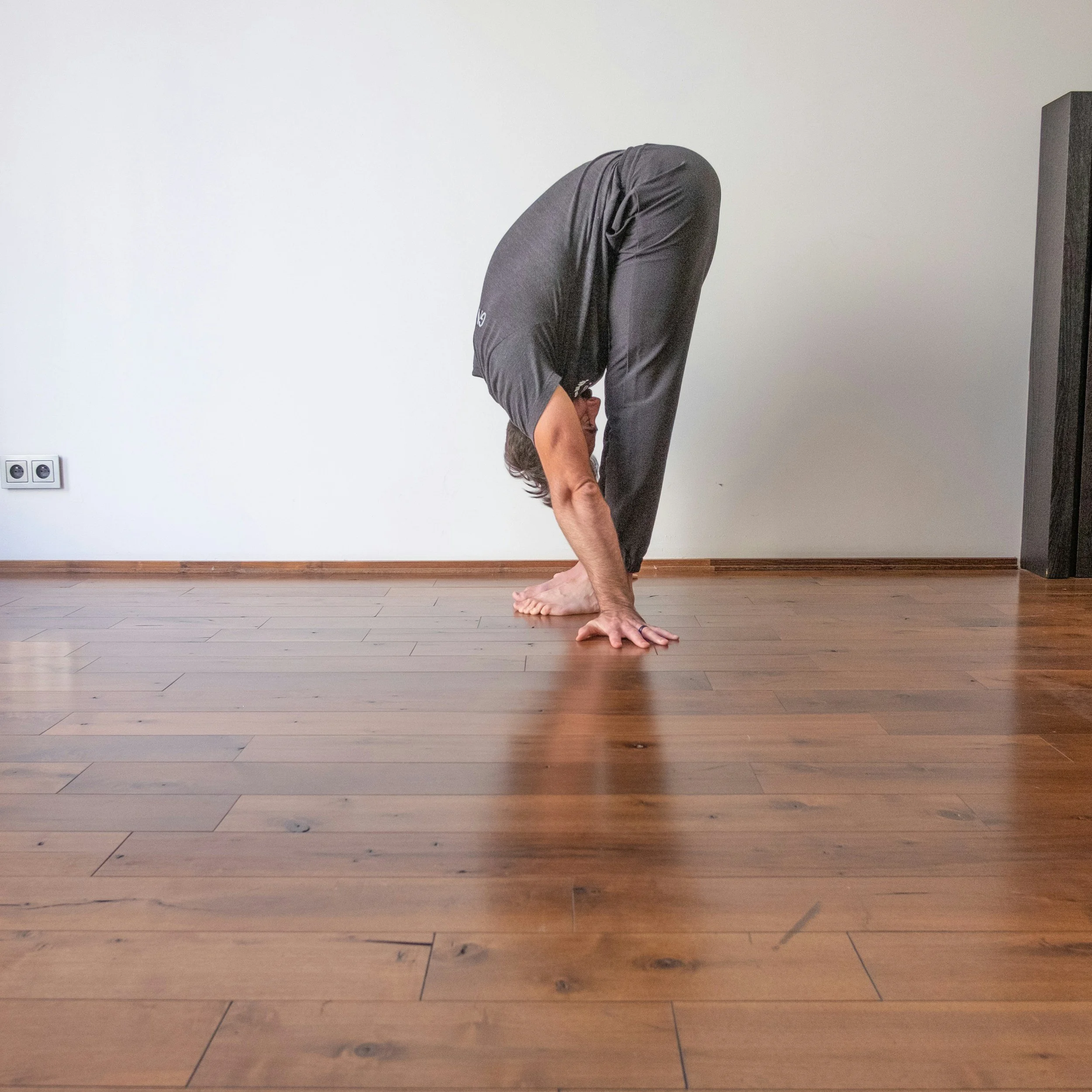
How to Implement Active Flexibility
Transitioning your routine from passive stretching to active mobility does not require hours of extra training; it simply requires a shift in how you execute your existing movements.
Load the Lengthened Position Safely. Prioritise exercises that challenge muscles where they are fully stretched. For example, choose a deep Romanian deadlift to load the hamstrings at length, or a full-depth goblet squat to challenge the hips at their structural limits.
Enforce Strict Eccentric Control. Avoid dropping through the lowering phase of your lifts. Take 3 to 4 seconds to lower the weight smoothly. This eccentric loading under tension is the exact mechanical trigger required to stimulate the addition of new cellular units within the muscle.
Isolate End-Range Contractions. Incorporate active mobility drills where you move a joint to its furthest position using only internal muscular power, then hold that contraction for 5 to 10 seconds. This signals the nervous system that you are choosing to navigate and own that specific physical space.
Respect Your Safe Boundaries. If you have naturally loose joints, shorten your range of motion slightly to avoid locking out or hyperextending. Focus heavily on squeezing the surrounding muscles to create stability rather than searching for a deeper stretch.
True physical well-being is not about how far your limbs can be pushed by gravity or an external strap. It is built on a targeted, evidence-based strategy that blends strength with mobility, allowing you to reclaim absolute control over how your body moves and feels every single day.
References
Journal of Sport and Health Science (2025). Triggering sarcomerogenesis: Examining key stimuli and the role attributed to eccentric training—Historical, systematic, and meta-analytic review. Journal of Sport and Health Science, 14(2), 185-198.
Sports Medicine (2023). Resistance Training Induces Improvements in Range of Motion: A Systematic Review and Meta-Analysis. Sports Medicine, 53(3), 711-722.
BMJ Open (2024). High-load strength training compared with standard care treatment in young adults with joint hypermobility and knee pain: study protocol for a randomised controlled trial (the HIPEr-Knee study). BMJ Open, 14(10), e090812.
Disclaimer. I love sharing the science behind how our bodies work, but please remember that this post is for educational purposes only. My goal is to empower you with general nutritional and fitness guidance to support your long-term health. This isn't a substitute for professional medical advice, diagnosis, or treatment. Every "body" is unique, so please check in with your doctor before starting a new nutritional or training programme to ensure it’s the right fit for your individual needs.