
Why We Need to Stop Using Pain to Measure a Good Workout
We’ve all had that moment the morning after a great workout trying to walk down the stairs and realising your legs have entirely different plans. There is a strange comfort in that familiar ache. It’s easy to feel like those sore muscles are proof of a job well done, a definitive proof that you really pushed yourself. On the flip side, if you wake up the next day feeling completely normal, it’s just as easy for a little doubt to creep in. You might wonder if you didn’t try hard enough or if you wasted a training session.
The fitness world has spent decades telling us "no pain, no gain," leading many of us to use soreness as an indicator of a successful workout. But biologically speaking, using pain to measure your progress can actually steer you off course. If your true goals are getting stronger and increasing healthy muscle mass, chasing that next-day ache isn't reliable.
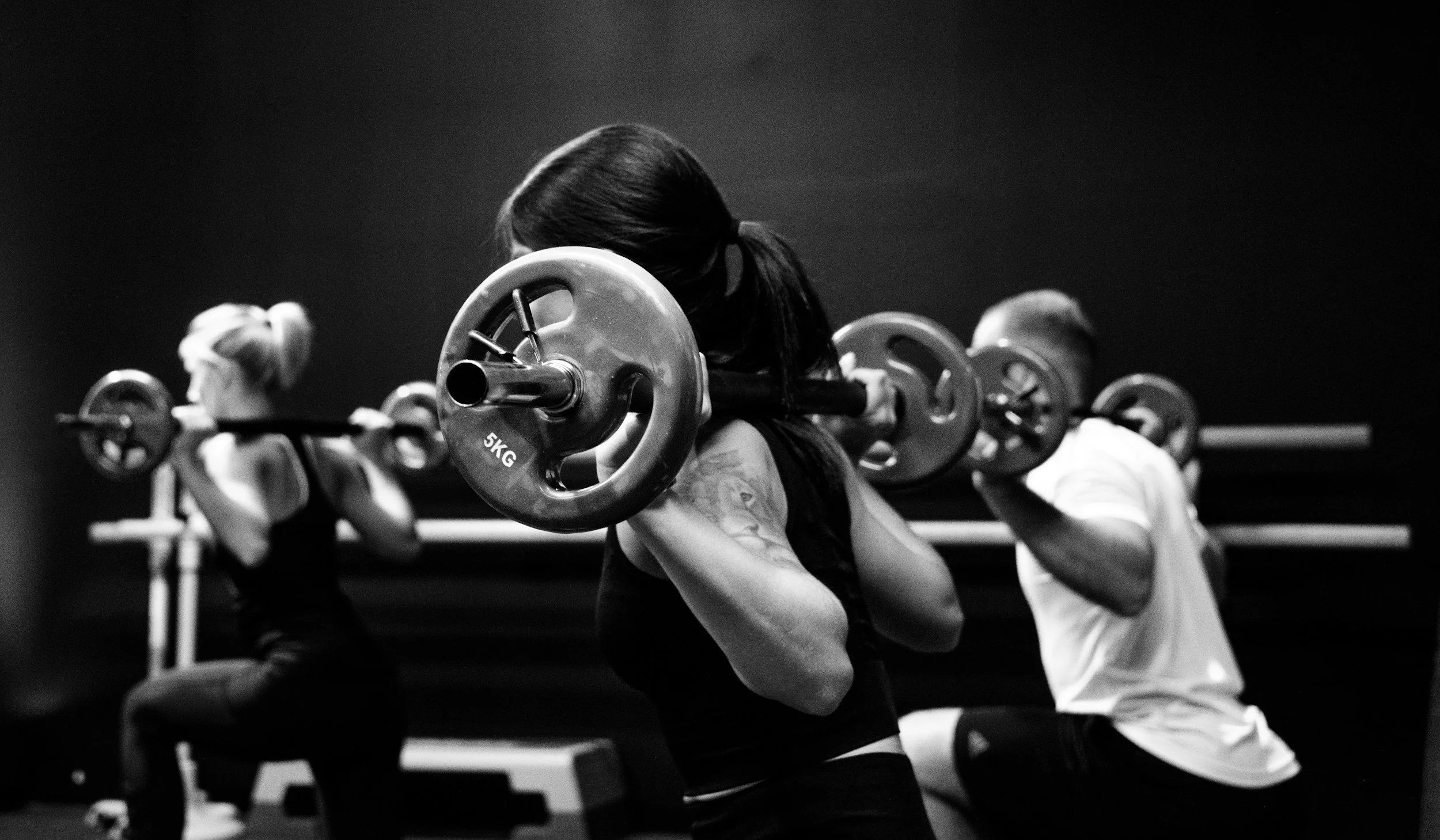
That day-after stiffness has a proper name: Delayed Onset Muscle Soreness (DOMS). A common myth is that it’s caused by a buildup of lactic acid in the tissues, but lactic acid actually clears out of your muscles within an hour or two after you stop moving.
What you are actually feeling is microscopic structural damage to the muscle fibres, followed by a completely healthy inflammatory response as your immune system sweeps in to repair and reinforce the area. This typically happens when you try a brand-new exercise, radically change your training volume, or focus heavily on the eccentric (lowering) phase of a movement, like taking a full four seconds to lower yourself into a squat.
While a tiny bit of this micro-damage is a natural byproduct of challenging yourself, research shows that how sore you feel doesn’t correlate to how much muscle mass or strength you are gaining. Your body is actually really efficient at adapting and growing entirely in the absence of pain.
When you’re working toward getting stronger and increasing muscle mass, consistency is everything. If you stick with the same structured routine for a few weeks, you will notice that you stop getting so sore.
This is due to something called the repeated-bout effect. Your nervous system and muscle tissues are highly adaptable, once they experience a specific physical stressor, they rapidly upgrade their internal structure so they can handle it much better next time.
This is usually the moment where people worry their workout has stopped working because their favourite success indicator has disappeared, but a lack of soreness is a celebration, it means your body has successfully adapted, grown more resilient, and built the strength to handle that workload. If you constantly switch up your exercises every single week just to force yourself to feel sore again, you never give your body the chance to master a movement, get genuinely strong at it, and pack on high-quality muscle tissue.
Relying on soreness as proof of a good workout can inadvertently slow down your goals. When you are so stiff that your basic daily movements feel uncomfortable, it changes how your body functions.
If your back or hips are deeply aching, your brain will subconsciously alter your form to protect those areas during your next workout. This can accidentally throw extra stress onto your joints and increase your risk of injury.
If your body is perpetually burning all its energy and resources just to patch up massive amounts of tissue damage, it has fewer resources left over to actually build new muscle mass and strength.
No one truly enjoys feeling physically broken week after week. When workouts leave you too exhausted to enjoy your daily life, exercise starts to feel like a chore rather than a rewarding habit, making it much harder to stay consistent.
Instead of asking yourself, "How sore am I today?", look for these much more accurate signs of a successful session.
Are you able to lift a slightly heavier weight, add an extra repetition, or move with cleaner form than you did a couple of weeks ago? That is the definitive proof that your muscles are growing and getting stronger.
Notice how stable and smooth the movements feel. When a weight that used to feel shaky now feels steady and controlled, your nervous system is levelling up.
A great training routine should give you energy, not drain it all away. If you leave your sessions feeling warm, capable, and ready to take on the day rather than needing a three-hour nap your workout was a massive success.
Your fitness journey should be about adding capabilities to your life, not taking them away. By shifting your focus away from next-day soreness and toward real indicators of strength and muscle growth, you will build a body that feels Strong, free and capable.
Disclaimer. I love sharing the science behind how our bodies work, but please remember that this post is for educational purposes only. My goal is to empower you with general nutritional and fitness guidance to support your long-term health. This isn't a substitute for professional medical advice, diagnosis, or treatment. Every "body" is unique, so please check in with your doctor before starting a new nutritional or training programme to ensure it’s the right fit for your individual needs.
References
Journal of Strength and Conditioning Research. Is muscle soreness a reliable indicator of exercise-induced muscle damage and hypertrophic potential? Journal of Strength and Conditioning Research, 25(1), 211-221.
Frontiers in Physiology. The Repeated Bout Effect: Molecular and Systemic Mechanisms of Tissues Adaptation Against Muscle Damage. Frontiers in Physiology, 10, 843.