
Why Being Healthy Feels Hard
Have you ever wondered why doing the basics, getting eight hours of sleep, eating nutritious meals, or moving your body, often seem like a significant feat of willpower?
If you feel like you're constantly working against the current, just to maintain a baseline level of well-being. The reality is that our modern world from the way our cities are built to the way our food is manufactured has been engineered to make the unhealthy choice the easiest.
We are essentially operating with ancient biological hardware in a modern, digital world. Our physiology evolved for a life of scarcity, movement, and community. We now live in an environment of abundance, stillness, and isolation. This mismatch creates constant friction between what your body needs and what the world offers.
Here is a look at why this struggle is very real, and why you deserve to offer yourself more grace.

1. The Pressure to Always Be "On"
In our current economic culture, "busyness" is often worn as a badge of honour. We have created a society that rewards constant availability, treating sleep, rest, and deep reflection as luxuries or, worse, time wasted.
Humans operate on ultradian rhythms, natural cycles of energy expenditure followed by necessary recovery. However, the structure of modern life demands your constant availability. Whether managing a household, a career, or social obligations, the expectation is that we are always available. When we override our natural need for a break, we force out bodies to rely on stress hormones just to keep functioning.
This keeps our sympathetic nervous system ("fight or flight" mode) permanently switched on. We are not just stressed we are in a state of hyper-vigilance. This chronic alertness keeps cortisol levels elevated, which physically alters the body it increases visceral fat storage, breaks down muscle tissue, increases insulin resistance, and creates systemic inflammation. We aren't just tired we are physiologically depleted.
The Science: A 2024 report by Mental Health UK noted that 91% of adults experienced high or extreme levels of pressure or stress in the past year, with one in five taking time off work due to burnout. Furthermore, research demonstrates that chronic cortisol exposure actually shrinks the prefrontal cortex the part of the brain responsible for self-discipline making it biologically harder to make healthy choices the more stressed you are.

2. When Food is Designed to Be Irresistible
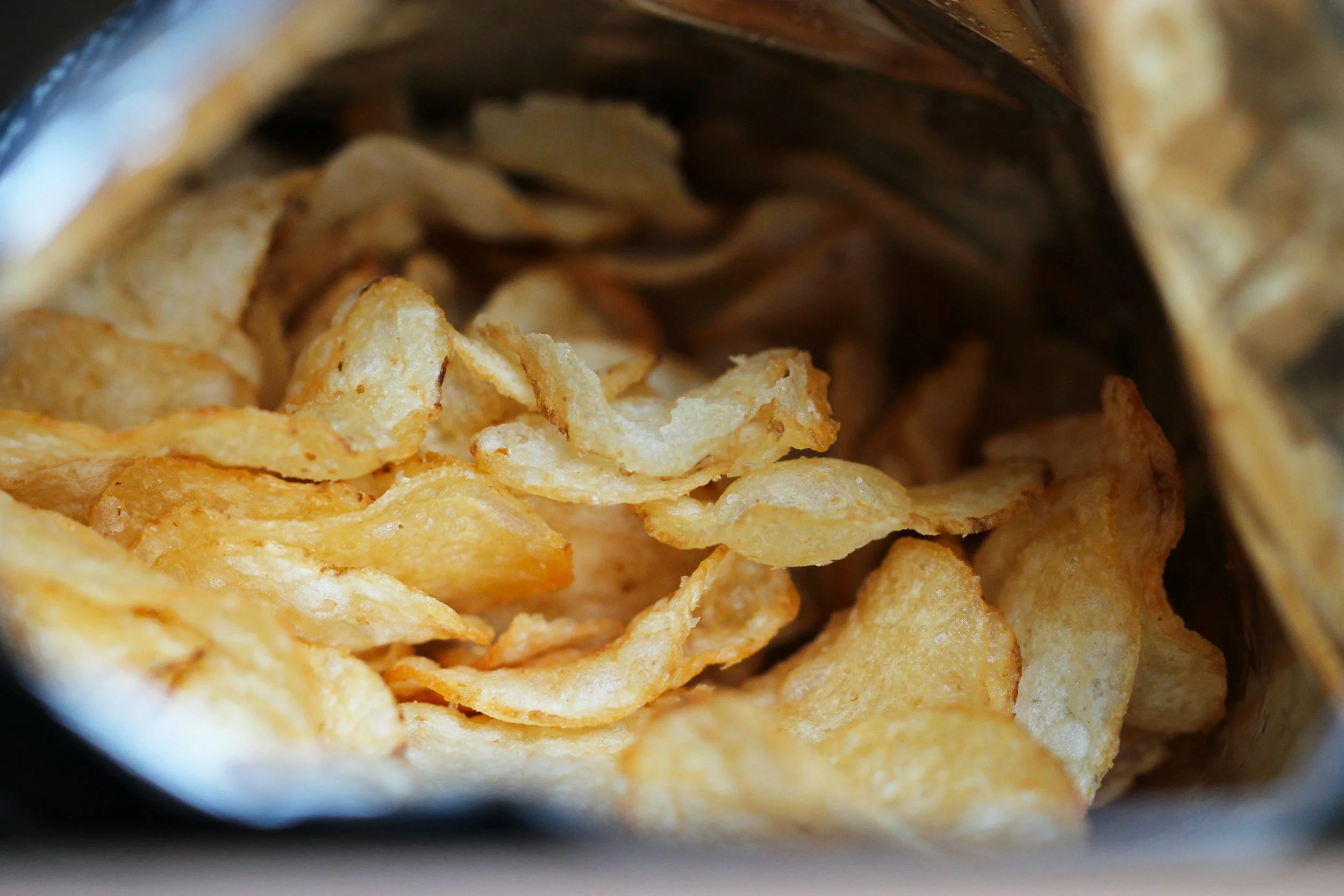
Have you ever found yourself not being able to stop eating a packet of biscuits or crisps? You are fighting against billion-pound research and development budgets designed to ensure you don't stop eating.
The modern food environment is dominated by Ultra-Processed Foods (UPFs). These products are chemically engineered to hit what food scientists call the "Bliss Point" a precise ratio of sugar, fat, and salt that overrides the brain's stop signals.
In nature, foods are rarely high in both fat and sugar simultaneously. When we encounter this combination in processed foods, it triggers a dopamine response similar to addictive substances. These foods are also often soft and low in fibre, meaning we consume calories faster than our gut hormones (like leptin and PYY) can signal to the brain that we are full.
The Science: A landmark controlled trial by the National Institutes of Health (NIH) found that people on a diet of ultra-processed foods ate, on average, 500 calories more per day than those on an unprocessed diet even when the meals were matched for nutritional value (fat, sugar, and protein content). The texture and speed of eating UPFs bypassed the body's natural satiety mechanisms. The food itself drove the consumption, not the individual's willpower.
It is important to add a note of nuance here. Not all processing is the enemy, and the goal isn't to fear your food. Many convenient staples like shop-bought wholemeal bread, plant-based milks, or tinned beans technically fall under the UPF umbrella but can absolutely be part of a nutritious diet.
Furthermore, food is also for pleasure. Enjoying your favourite treat in moderation does not equal failure. The issue is not that these foods exist, but that the environment pushes them as the default option for every meal, forcing you to constantly navigate around them.
3. A World Built for Sitting Still
For the vast majority of human existence, movement wasn't a task we scheduled into a diary, it was an unavoidable part of survival. We walked to get food, we carried heavy loads, and we squatted to rest.
Today, we have effectively engineered out natural movement. We have created an environment where efficiency is the primary goal. Urban sprawl necessitates cars, elevators replace stairs, and delivery apps bring the world to our sofas.
Physical activity has shifted from being an organic necessity to a "chore" (exercise). However, a one-hour gym session cannot fully undo the metabolic damage of 13 hours of sitting.
We have seen a collapse in Non-Exercise Activity Thermogenesis (NEAT) the energy we burn just living our lives. When we sit for prolonged periods, the production of lipoprotein lipase (an enzyme that breaks down fat) drops by near 90%. Our environment is literally signalling our cells to store fat.
The Science: According to the World Health Organization, physical inactivity is now the fourth leading risk factor for global mortality. Research indicates that the transition from active work to sedentary office work has resulted in a drop in daily energy expenditure of roughly 100 calories per day over the last 50 years enough to account for significant population-level weight gain without a single change in diet.

4. The Constant Noise in Our Pockets
Finally, we must acknowledge the invisible tax on our energy, the attention economy. Our devices are gateways to a constant stream of information, notifications, and social comparison.
The Biological Mismatch, our brains evolved to pay attention to novelty, a survival mechanism. Tech companies exploit this using "variable reward schedules" the same psychological mechanism used in slot machines. You pull the lever (scroll), and you might get a reward (a like, a funny video, a message). This uncertainty keeps dopamine loops firing, training our nervous system into a state of perpetual, low-level anxiety.
This "continuous partial attention" is fundamentally depleting. It fragments our focus and erodes the internal quiet we need to actually listen to our bodies. It is nearly impossible to interpret your body’s subtle signals for rest, hunger, or thirst when your cognitive bandwidth is occupied by a dozen flashing notifications.
The Science: A study from the University of Texas at Austin found that the mere presence of your smartphone nearby, even if it is on silent and face down, reduces available cognitive capacity (brain drain). Your brain is actively working to inhibit the impulse to check it, draining the mental resources you need for emotional regulation and health decisions.

Acknowledging the Reality
I am sharing this not to paint a bleak picture of modern life, but to hopefully validate your struggle. If you find it hard to be healthy, it is because it is hard.
Achieving balance in the modern world requires deliberate, intentional effort because the environmental current is always pulling us toward depletion, distraction, and convenience. It is a fundamental system mismatch, you are trying to function in an environment that your biology simply wasn't designed to recognise.
The goal of this post isn't to try and fix the system overnight. It’s just to acknowledge that the difficulty you face is real, systemic, and shared. You are doing the best you can in a world that wasn't built for your well-being.
Be gentle with yourself.
I love sharing the science behind how our bodies work, but please remember that this post is for educational purposes only. My goal is to empower you with general nutritional and fitness guidance to support your long-term health. This isn't a substitute for professional medical advice, diagnosis, or treatment. Every "body" is unique, so please check in with your doctor before starting a new nutritional or training programme to ensure it’s the right fit for your individual needs.