
The Facts About Walking, Intensity, and Finding Your "Sweet Spot".
There is a little moment of joy that many of us know well. You are walking through the house or finishing your evening routine, and suddenly buzz. Fireworks explode on your watch face. You have hit the magic number, 10,000 steps. It feels like a victory, and it should! Movement is always something to celebrate.

But as we strive for that daily celebration, it is worth pausing to ask a fundamental question. Is 10,000 steps actually the physiological requirement for health, or is it just a catchy number?
For many people, this target can feel like an all-or-nothing pass mark. If we hit 9,000, we feel we haven't quite done enough. But the science behind walking reveals a much more nuanced, forgiving, and encouraging picture.
Understanding the real mechanics of walking, how it affects your metabolism, your heart, and your longevity, allows you to stop chasing a generic target and start building a movement habit that actually serves your own biology and fitness level.
Marketing, Not Medicine
The 10,000-step target didn’t originate from a study by the World Health Organization or a consensus of cardiologists. It actually began in Japan in 1965. A company called Yamasa Clock created one of the first commercial pedometers to capitalise on the excitement of the Tokyo Olympics. They named the device Manpo-kei, which translates literally to "10,000 steps meter."
Why 10,000? Because the Japanese character for 10,000 (万) looks like a person walking.
It was a brilliant marketing slogan that stuck. While walking 10,000 steps is certainly beneficial, treating it as a medical minimum is flawed.

If hitting five figures every day feels daunting. The actual relationship between steps and health is not linear, you don’t need to walk for hours to see massive benefits.
Research consistently shows that the most significant reduction in mortality risk occurs when moving from "sedentary" (2,000 steps) to "moderately active" (6,000–8,000 steps).
A landmark cohort study by Dr. I-Min Lee, published in JAMA Internal Medicine (2019), followed nearly 17,000 older women over four years. The findings were stark. Women who averaged 4,400 steps per day had significantly lower mortality rates than those taking 2,700.
Crucially, the benefits continued to rise with more steps but plateaued at around 7,500 steps. Doing more than 7,500 did not offer significant extra protection against mortality for this group.
A wider meta-analysis published in The Lancet Public Health (2022), which analysed data from nearly 50,000 adults, refined this further. They found that for adults over 60, the risk of premature death levelled off at 6,000–8,000 steps per day.
So, you don’t need to walk 10.000 steps every day to save your life. The first 4,000 to 6,000 steps are actually the most valuable steps you take.
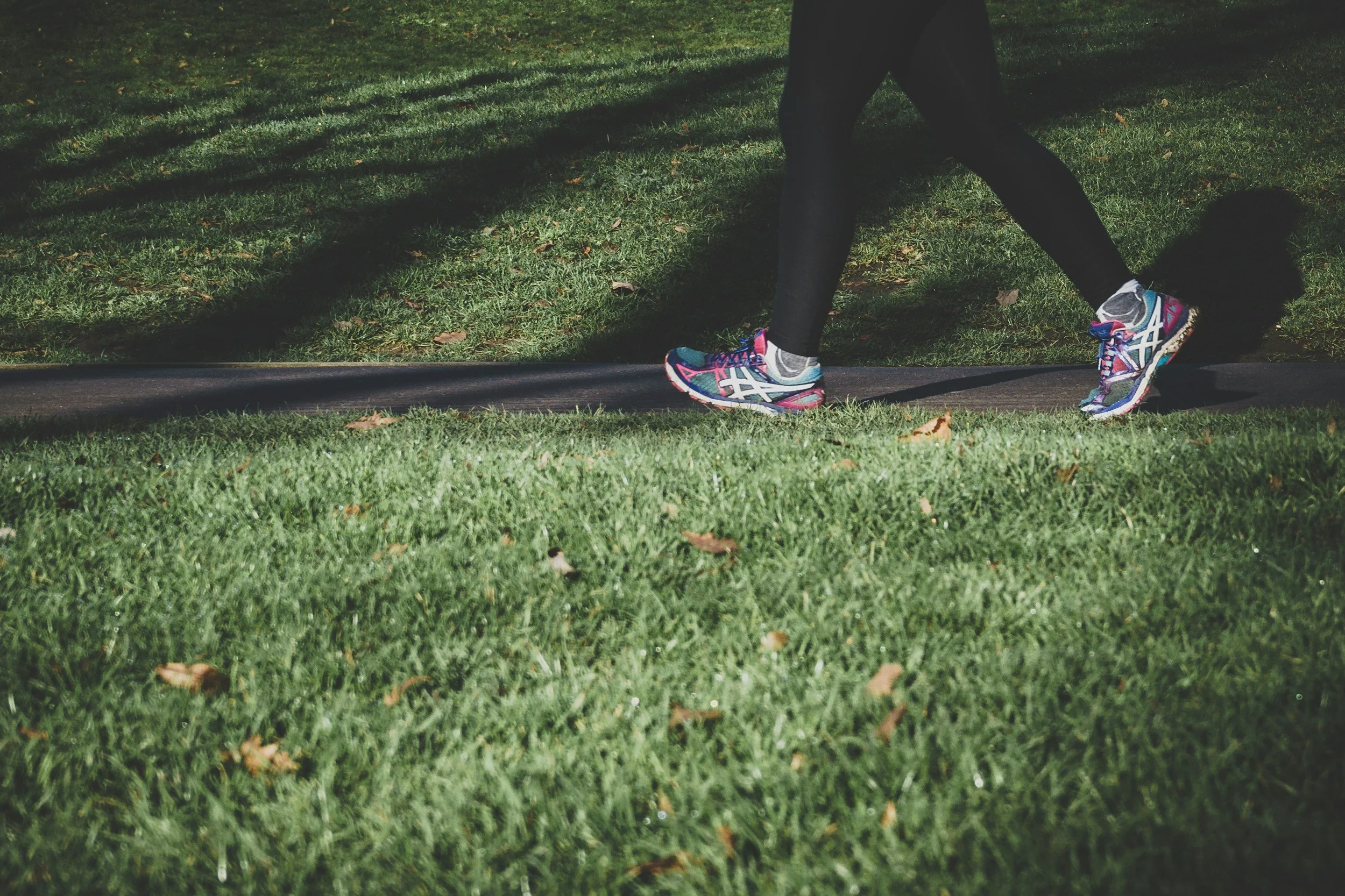
While we focus on the quantity of our steps, we often overlook the quality. Trudging slowly through a shopping centre places a different demand on your body than a brisk walk in nature.
To unlock the deeper cardiovascular and metabolic benefits, we need to consider cadence (steps per minute).
When you walk briskly, you increase "shear stress" on your arterial walls. This sounds negative, but it’s actually a good thing. It prompts your endothelial cells (the lining of your blood vessels) to produce nitric oxide, a molecule that relaxes blood vessels and lowers blood pressure.
Research published in the British Journal of Sports Medicine (2018) suggests that "brisk walking" is associated with a 24% reduction in risk of all-cause mortality compared to walking at a slow pace.
So, what is "brisk"? A study in the International Journal of Behavioural Nutrition and Physical Activity (2019) defined the threshold for moderate-intensity walking as approximately 100 steps per minute. If you are walking faster than this, you are turning a stroll into a cardiovascular workout.

If your goal is metabolic health (managing blood sugar, insulin sensitivity, or weight), when you walk matters just as much as how far.
Our muscles are giant glucose sinks. When we contract our muscles during a walk, they can absorb glucose from the bloodstream without needing as much insulin, this process is called insulin-independent glucose uptake.
A systematic review in Sports Medicine (2022) compared the effects of sitting versus standing or light walking after meals. The researchers found that engaging in light walking for just 2 to 5 minutes starting 60 to 90 minutes after eating significantly blunted blood sugar spikes compared to standing or sitting.
A short, 10-minute walk immediately after your meals may be more metabolically effective than one long 30-minute walk done on an empty stomach.

If increasing your step count feels impossible because you don't have a spare hour to go for a walk, the solution could be "movement snacking." This approach involves doing small amounts of movement throughout the day rather than trying to find one big block of time.
The Waiting Walk. Whenever you are waiting for something, the kettle to boil, the microwave to ping, or a file to download, pace the room. You can easily accumulate 300 steps in the time it takes to brew tea.
The Mobile Meeting. If you are on a phone call that doesn't require a screen, stand up and walk. Even pacing in a small room keeps your metabolism active.
Park with Purpose. Stop looking for the closest parking space. Intentionally parking at the back of the carpark (or getting off the bus one stop early) is the easiest way to add 500 steps to your day without thinking too much about it.

So, if 10,000 isn't the law, what should your goal be? The answer depends entirely on your current physiology and goals.
If you are managing injury or illness, Ignore the 10,000 number entirely. Your goal is consistency, not volume. Aiming for a baseline (e.g., 3,000 steps) that you can hit every day without crashing is superior to hitting 10,000 once and needing days to recover.
If you are sedentary, the increase from 2,000 to 4,000 steps provides the statistically largest health boost. Focus on that first victory.
If you want heart health, Focus on intensity. Can you get 3,000 of your daily steps done at a pace of 100+ steps per minute?
If you are already active and healthy: You might wonder, "Is doing more than 8,000 steps a waste of time?" Absolutely not. While the mortality protection curve flattens, higher step counts (10,000–15,000+) are excellent for increasing total daily energy expenditure (calorie burn), mental clarity, and aerobic endurance. If you enjoy high-volume walking and recover well, keep going.

Walking is one of the most powerful, accessible tools we have for mental and physical well-being. It clears the mind and regulates our metabolism.
However, a metric is only useful if it acts as a tool, not a tyrant.
Your health is not a numbers game, it is a bio-individual reality. Find a rhythm that feels restorative, challenging enough to be beneficial, but sustainable enough to do again tomorrow.
Are you looking to build a movement routine that respects your energy levels and fits your lifestyle?
I work with clients to create personalised wellness strategies that focus on sustainable health, not arbitrary numbers. If you are ready to find your own pace, I would love to support you.
I love sharing the science behind how our bodies work, but please remember that this post is for educational purposes only. My goal is to empower you with general nutritional and fitness guidance to support your long-term health. This isn't a substitute for professional medical advice, diagnosis, or treatment. Every "body" is unique, so please check in with your doctor before starting a new nutritional or training programme to ensure it’s the right fit for your individual needs.