
The Key to Lasting Strength Isn't Just Your Muscles, It's in Your Mind.
When we think about health, our minds often jump straight to the physical, the number on the scale, the calories we’ve burned, or maybe the number of steps we’ve taken. But one of the most important things you can actually do for your body doesn't happen in the gym.
Your thoughts and feelings have a direct impact on your physical strength along with your wellness. The journey to lasting and sustainable health means you should try to treat your body and your mind as one unified system. This means acknowledging that your emotional state, along with how you speak to and treat yourself, affects you physically.

It’s crucial to acknowledge that nurturing a positive perspective isn't easy work. When life involves navigating tight schedules, potentially caring for aging parents, managing career demands, caring for children, all while dealing with the unpredictability of hormonal shifts, it is perfectly normal for anxiety and self-doubt to creep in when your physical reality feels unstable. The problem is compounded by the endless scroll of curated perfection and comparison culture, where social media feeds reinforce impossible standards, intensify what could be decades of internalised negative self-image. It’s a genuine struggle to protect your inner peace and focus on personal growth when you feel emotionally depleted and constantly pulled down by external pressure. If finding positivity feels impossible on a given day, focus instead on being kind to yourself. That is why training your mental resilience, even when it feels emotionally challenging, could be the most vital form of inner strength and self-care you can embrace.
Stress and Strength
The connection between your mental state and your physical body is not just a feeling; it’s a physiological fact. When you experience stress or anxiety, your body releases hormones like cortisol. Chronically elevated cortisol levels can lead to increased inflammation, fatigue, and muscle tension, making it harder to build strength, recover from workouts, and can even make you store fat around your midsection [1].
But having a calm approach can instantly reduce these negative physiological effects. When you feel stress rising, take a deep breath in, and then exhale slowly for a count of six. This simple act signals to your nervous system that you are safe, allowing your body to switch off the stress response and switch on recovery, which ultimately allows your body to perform and recover more effectively [2]. Using your breath to ground yourself is a powerful tool you have to cultivate calm and help to reduce the physical impact of stress.

Building Your Mental Strength
So, how do you start? It's a practice, not a one-time event. It requires the same consistency and effort as physical training. Here are three powerful ways to begin, grounded in research:
1. Train Your Inner Dialogue
Your inner voice is not just a thought; it's a reflection of the way you treat yourself, and your body internalises every message. A harsh, critical inner voice signals danger to your nervous system, keeping you stuck in a physical stress response that drains your energy and hinders recovery. But choosing kindness and support creates an environment of psychological safety, allowing your body to switch its focus to healing and sustainable health.
The key is to train your inner voice to become a source of strength. This practice, called reframing, involves consciously challenging and swapping your habitual negative thoughts as they appear. Negative self-talk, even internal criticism, can actually hinder your physical performance and motivation [3]. For instance, when you hear "I can't do this," replace it with "I am going to focus and give this my best effort right now." If you find yourself thinking, "I've ruined my progress," consciously choose to tell yourself, "One off day doesn't define my journey. I choose to get back on track with my next meal or activity." Even when the motivation is low, swap "I really don’t want to work out" with "I'm going to start with 15 minutes, then if I don’t want to continue, I can stop."

Start by listening carefully to the language you use when you face a physical challenge or a moment of perceived failure. By consciously replacing critical self-talk with supportive, accurate reframes, you change the physical signal you send to your body.
It’s also incredibly important to listen when your body tells you that it’s tired. Instead of pushing through and exhausting yourself, you have the opportunity to reframe this feeling as an empowered choice. You can gently tell yourself, "My body is asking for rest, and I’m going to give it what it needs." This shift allows you to respect your body's limits and make a conscious choice that genuinely supports your long-term health and vitality.
2. Combatting Self-Doubt with Evidence
Self-doubt is a natural feeling, and you shouldn't feel guilty about it, it doesn't have to define your choices. One of the most effective ways to move past it is by challenging these thoughts with evidence, rather than emotion.
When that familiar negative whisper pops up—like, "I can't do this" or "I'll never get stronger" don't argue with it, simply ask two simple questions.
Is this thought 100% true?
What evidence do I have from the past that contradicts this thought?
You might remember a time you finished a challenging workout, lifted a heavier weight than you thought you could, or simply showed up on a day you genuinely didn't feel like it. By focusing on these past successes, you are consciously building a library of mental evidence that proves your inner critic wrong. This practice quietly builds self-efficacy, which is the powerful belief in your ability to succeed and a strong motivator for long-term physical performance [4].
3. Celebrate the Feeling of Progress
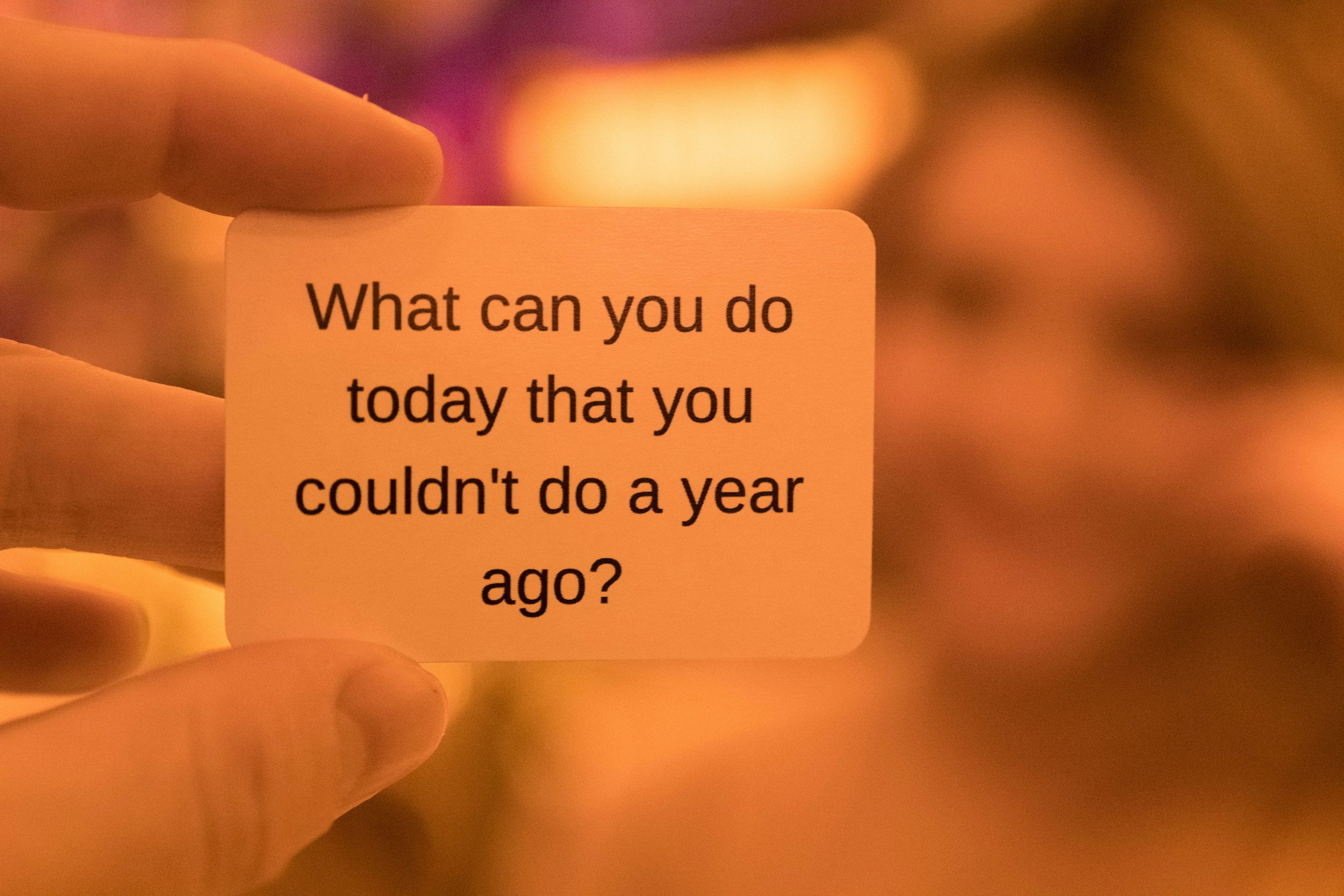
Your journey is about so much more than a single metric or external appearance. Focusing solely on one number can easily lead to frustration and burnout which could make your progress feel impossible. Instead try celebrating the subtle shifts that prove you are making progress towards your goals.
You could be sleeping soundly through the night and waking up feeling rested.
You find you have more sustained energy left at the end of the day to spend time on your own hobbies or socialise with friends.
You feel confident and comfortable in whatever you choose to wear.
You feel stronger when carrying heavy shopping bags or lifting things around the house.
You're waking up without stiffness or nagging pain.
Focusing on the things that genuinely make your life better leads to much greater long-term motivation and adherence to a healthy lifestyle [5].
From Inner Work to Movement
Your mind and body truly work as a team. Building your mental strength is the key to unlocking your physical potential. The more you focus on your inner work and perspective, the more consistent and effective your workouts will become. When you silence self-doubt and celebrate your progress, you create the mental space you need to show up for yourself, day after day.
Start by being kind to yourself and acknowledge your progress, both big and small.
Citations
[1] Chrousos, G. P. (2009). Stress and disorders of the stress system. Nature Reviews Endocrinology, 5(7), 374-381.
[2] Zaccaro, A., et al. (2018). How Breath-Control Can Change Your Life: A Systematic Review on Psycho-Physiological Correlates of Slow Breathing. Frontiers in Human Neuroscience.
[3] Hatzigeorgiadis, A., et al. (2011). Self-talk and sports performance: a meta-analysis. Perspectives on Psychological Science, 6(4), 348-356.
[4] Ashworth, M., et al. (2023). The role of self-efficacy in physical activity adherence: A systematic review and meta-analysis. Psychology of Sport and Exercise, 64, 102315.
[5] Ryan, R. M., & Deci, E. L. (2000). Self-determination theory and the facilitation of intrinsic motivation, social development, and well-being. American Psychologist, 55(1), 68.
I love sharing the science behind how our bodies work, but please remember that this post is for educational purposes only. My goal is to empower you with general nutritional and fitness guidance to support your long-term health. This isn't a substitute for professional medical advice, diagnosis, or treatment. Every "body" is unique, so please check in with your doctor before starting a new nutritional or training programme to ensure it’s the right fit for your individual needs.